When the Grid Says No: Scoring Power Readiness Before the Feasibility Study
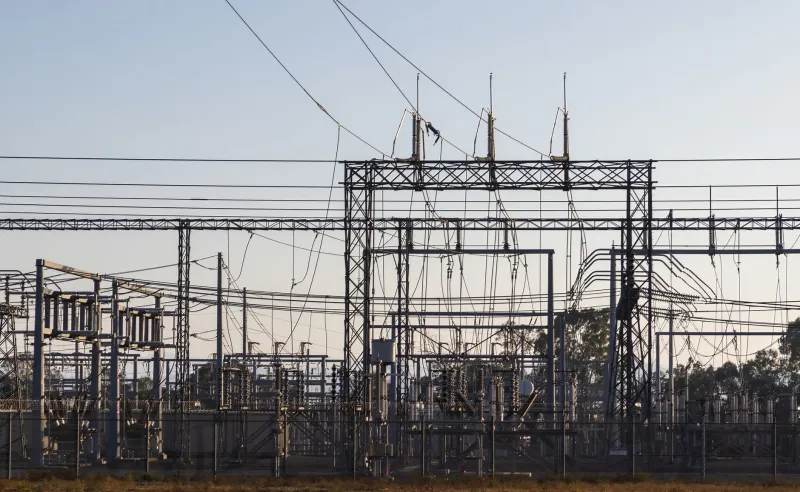
Ask a project developer in the western United States what worries them most about the next five years and the answer is increasingly unlikely to be metallurgy. It is more likely to be a number issued by a regional transmission organization, a utility planning office, or a cooperative board: a queue position.
Power access has moved from a line item in the capital estimate to a determinant of schedule, and schedule is a determinant of value. For exploration companies, the implication is uncomfortable but clear. A deposit that cannot be energized is a drill result with an uncertain future, and the market has begun to price that distinction well before a feasibility study is published.
The Queue as a Scheduling Instrument
Interconnection is a process, not a purchase. A generator or large load seeking grid service submits an application, funds studies, and waits for system impact and facilities studies to determine what upgrades are required and who pays for them. Only after those studies conclude does a project receive an interconnection agreement with a defined capacity and a defined in-service date.
Historically, a mining project with a multi-year permitting horizon could treat the electrical queue as a parallel workstream. That assumption has weakened. Across several US regions, withdrawal-and-resubmission cycles have repeatedly reset queue positions, and reforms intended to shorten the process have in some cases changed the rules mid-queue rather than reduced the wait.
Why Competing Loads Changed the Arithmetic
The past several years of load growth have been driven disproportionately by data centers, industrial electrification, and in some regions hydrogen and battery manufacturing. These loads are large, they are creditworthy, and they are mobile. A hyperscale campus that can contract for firm capacity and accept an earlier in-service date will generally outcompete a mine that needs a long lead time, uncertain financing, and a permit it does not yet hold.
That competition operates in two directions. It affects the availability of capacity on existing infrastructure, and it affects how utilities and transmission owners prioritize upgrade spending. A substation upgrade justified largely by a data-center interconnection may incidentally benefit a nearby mine. The same upgrade deferred because the anchor load withdrew may set the mine back by years.
The practical consequence is that a project's position in the queue now functions as an asset in its own right. It can be transferred in some jurisdictions, it can be assigned value in a transaction, and it can be lost through procedural missteps.
Four Routes to Firm Capacity
Projects facing queue risk generally pursue some combination of the following.
Standard interconnection with network upgrades. The conventional path. It offers the lowest delivered cost per megawatt-hour in most cases, but the schedule is outside the developer's control and the upgrade cost allocation can be material. Where upgrade costs are assigned to the interconnecting party, the capital estimate should be treated as provisional until the facilities study is complete.
Behind-the-meter generation. On-site natural gas, reciprocating engines, or a hybrid arrangement can compress the timeline dramatically by removing dependence on network capacity. The trade-offs are fuel logistics, emissions permitting, and a higher operating cost per unit of power. For a project with a long mine life, on-site generation is often a bridge rather than a destination.
Power purchase agreements with existing generators. Contracting directly with an operating generator, including via a virtual or physical PPA, can secure price certainty without waiting for new capacity. The constraint is deliverability: a contract for energy is not the same as a contract for firm capacity at the project's meter.
Storage-supported and hybrid configurations. Co-located storage can firm a variable supply and, in some markets, allow a project to shape its load to available capacity. This is increasingly discussed in western markets, though the regulatory treatment of hybrid facilities varies and is still evolving.
Reading the Power Section of a Technical Report
A well-prepared technical report will state assumed power source, assumed tariff, assumed connection point, and assumed energization date. The quality of those assumptions varies widely. Investors can test them with a short set of questions.
- Is there an executed interconnection agreement, or only an application? The distinction is the difference between a date and a hope.
- Has the facilities study been completed and are upgrade costs quantified? Unquantified upgrade costs are a contingent liability inside the capital estimate.
- Who bears the cost of network upgrades, and is any portion refundable?
- Is the assumed energization date consistent with the permitting schedule, or does one lag the other by years?
- What is the backup plan if the grid date slips, and what does that backup cost per megawatt-hour?
A study that assumes grid power at a regional industrial rate without disclosing queue status is not necessarily wrong, but it is incomplete. The omission is worth flagging in the same way a missing metallurgical test would be flagged.
A Simple Readiness Scorecard
A practical scoring approach assigns weight across four dimensions: the legal status of the interconnection (executed agreement is strongest, application only is weakest); the quantified cost of required upgrades; the contracted or permitted status of any on-site generation; and the presence of a credible bridge supply that can carry the project through a delay.
Projects that score well on all four can absorb a schedule shock. Projects that depend entirely on a single queue position at an unstudied substation are exposed to a risk that grades cannot offset and that a strong drill hole does not cure.
What This Means for Exploration Strategy
For juniors, the strategic response is to treat power as a targeting criterion rather than an engineering afterthought. Ground near existing infrastructure with headroom, or adjacent to a substation with an identified upgrade path, deserves a premium in the ranking of targets. Districts that require new transmission to be built before a mine can operate should be assessed on a longer horizon, and the market should be told so plainly.
For investors, the lesson is that feasibility is no longer a single document published at a single moment. It is a sequence of constraints, and power is now among the earliest and least forgiving. Reading the grid before reading the study is a habit worth forming in 2026, because the project that cannot be energized on schedule will not be rescued by its grade.