Kingsview Minerals Field notes on exploration and mining capital

Kingsview Minerals

Field notes on exploration and mining capital

Latest Articles

The PEA’s Quietest Number: Stress-Testing US Junior Economic Studies in 2026
Capital Markets

The PEA’s Quietest Number: Stress-Testing US Junior Economic Studies in 2026

Preliminary economic assessments remain the most widely circulated and least rigorously read documents in US junior mining. This field note examines the assumptions that most often flatter a PEA and offers a practical framework for distinguishing engineering substance from investor-relations arithmetic.


Capital Markets

The Layers Beneath the Grade: Auditing Royalty Burdens in 2026 US Junior Takeovers

US junior takeovers increasingly turn on obligations that sit between the ground and the cash flow: layered NSR royalties, streams, carried interests, and retained minority positions. In 2026, acquirers are repricing headline grade against the real retained value that survives the royalty stack.

The Calendar Risk in the Core Tray: Assay Turnaround and the 2026 US Exploration Program
Exploration Strategy

The Calendar Risk in the Core Tray: Assay Turnaround and the 2026 US Exploration Program

Drill rigs are booked months out, but in 2026 the more binding constraint often sits behind the core tray: sample preparation and analytical capacity at commercial assay laboratories. This field note explains what drives turnaround times, how to read “assays pending” disclosures, and how operators can contract for laboratory access before the bit turns.

The Earn-In Arithmetic: What a Farm-Out Really Costs a US Junior
Capital Markets

The Earn-In Arithmetic: What a Farm-Out Really Costs a US Junior

Farm-out agreements are again the default funding route for cash-constrained US exploration companies, but the headline commitment is rarely the whole price. This piece separates the cash from the carry, walks through staged earn-ins, back-in rights, and dilution formulas, and sets the terms against a straight equity raise.

When the Grid Says No: Scoring Power Readiness Before the Feasibility Study
Exploration Strategy

When the Grid Says No: Scoring Power Readiness Before the Feasibility Study

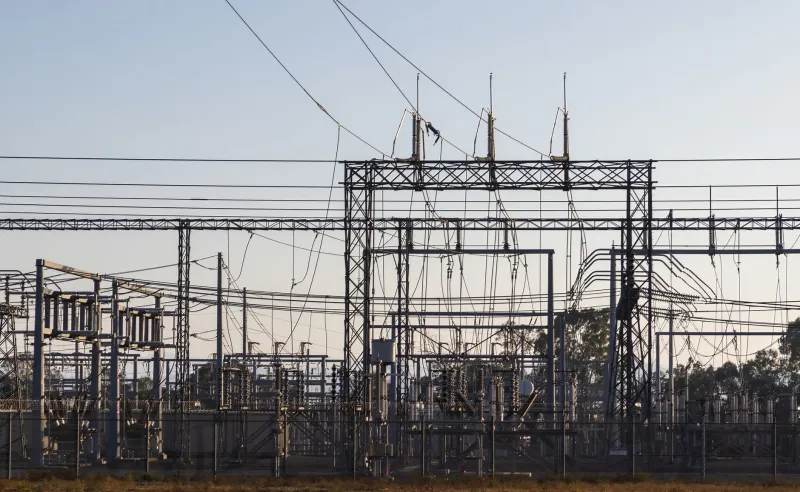
For a growing number of US mining projects, the binding constraint is neither grade nor permit but a position in an interconnection queue. This analysis explains how grid access is scheduled, why competing loads have stretched timelines, and how investors can grade a project's power readiness ahead of the study.

The Aquifer Behind the Feasibility Study: How Prior-Appropriation Water Rights Are Repricing US Mine Permits
Capital Markets

The Aquifer Behind the Feasibility Study: How Prior-Appropriation Water Rights Are Repricing US Mine Permits

In the arid West, a mine's water right can matter as much as its grade. This analysis examines how prior-appropriation doctrine is shaping US permitting timelines, feasibility assumptions, and the capital markets' view of project risk in 2026.

The Core Shack Is a Stress Test: A 2026 Field Guide to Investor Site Visits at US Juniors
Exploration Strategy

The Core Shack Is a Stress Test: A 2026 Field Guide to Investor Site Visits at US Juniors

Investor site visits are becoming a standard part of the US junior exploration story. This field guide explains what a core-shack tour can reveal about geological confidence, management credibility, and social license, and what polished presentations still tend to hide.

The Bond Before the Borehole: Why Reclamation Collateral Now Governs US Mine Feasibility in 2026
Exploration Strategy

The Bond Before the Borehole: Why Reclamation Collateral Now Governs US Mine Feasibility in 2026

Reclamation bonding is often modeled as a closing cost, but in 2026 it behaves more like a covenant that arrives before construction and follows the asset through every financing. This field note compares US bonding regimes and gives investors a checklist for stress-testing the liability before backing a development-stage project.

Contract Before Concentrate: The Quiet Repricing of US Critical-Mineral Juniors in 2026
Capital Markets

Contract Before Concentrate: The Quiet Repricing of US Critical-Mineral Juniors in 2026

Offtake agreements are being announced earlier and priced more aggressively, and the headline calls it validation. The contract may be a ceiling. This analysis separates offtake from royalty and streaming, flags terms that cap upside, and reads the 2026 US deal landscape.

Ground Is Not Free: The Claim-Portfolio Burn Rate Hiding in US Junior Budgets
Capital Markets

Ground Is Not Free: The Claim-Portfolio Burn Rate Hiding in US Junior Budgets

US juniors spend heavily explaining what they will drill and far less explaining what it costs to keep the ground. In 2026, claim-portfolio burn rate is a useful quality signal for investors comparing exploration companies.

Beyond the Assay: The Metallurgical Tests That Decide a US Mine's Economics
Exploration Strategy

Beyond the Assay: The Metallurgical Tests That Decide a US Mine's Economics

Grade is the number that travels fastest in US exploration press releases, but recovery and concentrate quality can rewrite project economics long before a resource estimate. Investors need to distinguish bench-scale optimism from locked-cycle and pilot-plant confidence.

The Approval Clock as Collateral: Grading US Mine Projects in 2026
Capital Markets

The Approval Clock as Collateral: Grading US Mine Projects in 2026

For US mining equities in 2026, grade is necessary but not sufficient. Permitting sequence, wetlands exposure, state authority, and community consent now shape the timing and capital intensity of every development story. This scorecard offers investors a disciplined way to price the approval path before the first shovel turns.

The Intercept Illusion: Reading US Drill Releases in 2026 Without Getting Played
Exploration Strategy

The Intercept Illusion: Reading US Drill Releases in 2026 Without Getting Played

A spectacular headline intercept is not a deposit, and one hole rarely makes a district. This skeptical field guide explains true width, cut-off grades, grade-thickness, QA/QC red flags, and metallurgical recovery — and why US exploration stocks often misprice the difference.

Funding the Bit: Inside the 2026 Capital Stack for US Critical-Mineral Exploration
Capital Markets

Funding the Bit: Inside the 2026 Capital Stack for US Critical-Mineral Exploration

US critical-mineral explorers entered late 2026 with more financing options than the headline market suggests, but the capital stack is increasingly layered and conditional. This analysis maps the royalty, strategic, government-backed, and public-market channels now funding the drill bit, and what recent field notes imply for investors and operators.

Beyond the Headlines: Five US Districts Where 2026 Exploration Could Surprise the Market
Exploration Strategy

Beyond the Headlines: Five US Districts Where 2026 Exploration Could Surprise the Market

Capital has been slow to follow several US mining districts with genuine district-scale potential, leaving a gap between geological promise and market attention. This field-notes review examines five overlooked areas—Walker Lane, Idaho’s cobalt belt, Arizona’s porphyry corridor, Alaska’s gold belts, and Montana’s rare-earth plays—and the 2026 catalysts that could change the narrative.