The Archive Discount: Auditing Inherited Drill Data Before a 2026 US Junior Acquisition
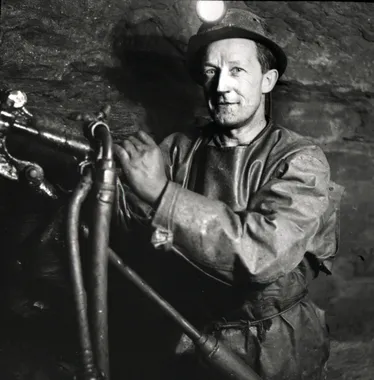
Photo: Unknown photographer, CC BY-SA 4.0, via Wikimedia Commons
US juniors have spent the past several years competing for ground, permits, and drill meters. In 2026, another scarcity is shaping transactions: credible historical evidence. Sellers increasingly present scanned assay certificates, old drill logs, geochemical spreadsheets, and maps inherited from prior operators as a shortcut to a resource story. Buyers, facing expensive new drilling and long assay turnarounds, are tempted to treat those archives as a capital-efficient head start. The temptation is understandable. The valuation error is not.
A historical database is not a mineral resource. It is a collection of assertions, some well documented and some merely repeated. In an acquisition, staking program, or technical report, the difference between an archive that can be relied upon and one that cannot is usually measured in legal rights, custody records, and quality-control evidence, not in the number of drill holes it contains.
Why the Archive Is Priced Twice
Legacy data enters a US junior transaction through two doors. The first is cost avoidance: if old drilling can be validated, the buyer may defer some confirmation meters and move faster toward a maiden estimate. The second is disclosure value: under SEC Regulation S-K 1300, a technical report summary must be supported by information that a qualified person can stand behind. Those are different benefits, and they rarely carry the same value.
A seller may market a project as having 40,000 feet of historical drilling. The buyer should ask a narrower question: how many of those feet can be tied to a named operator, a dated program, a survey grid, a sampling protocol, and a laboratory that still has records? The answer often shrinks the archive before it ever reaches a resource model.
Rights Before Rows
The first audit is not technical. It is contractual and land-based. Historical data may have been generated by a prior owner, a joint-venture partner, a government-funded survey, or a contractor that retained rights in its own work product. A buyer needs to know what was assigned, what was licensed, and what was merely left in a filing cabinet.
In the United States, that inquiry includes the chain of title to the claims or leases, but it should not stop there. Data-use provisions can survive claim transfers, and old agreements may restrict commercial disclosure or require consent from a previous partner. State geological survey archives and public records can be useful, but public availability does not equal freedom to republish or rely on the material in a securities filing. The question is not whether a document can be found. It is whether the issuer can use it.
Chain of Custody Is a Ledger
A drill hole is a physical event. The data it produces should have a paper trail: collar surveys, downhole surveys, sample intervals, dispatch records, laboratory receipts, and assay certificates. In older archives, that trail is often incomplete. Buyers should expect gaps, but they should price them.
A useful diligence test is to select a small number of historical holes and reconstruct them end to end. Can the collar location be re-established on the ground? Do the sample intervals match the logs? Is there a laboratory certificate that corresponds to the reported values? Was the sample preparation method appropriate for the material? If the archive cannot answer those questions for a representative subset, it should be treated as a lead-generation tool rather than a resource foundation.
QA/QC: The Difference Between Data and Evidence
Quality assurance and quality control are where many legacy archives lose their premium. Modern programs insert blanks, duplicates, standards, and external checks into the sample stream. Older programs may have done so inconsistently, or may have documented the work in a form that no longer survives.
For a US junior in 2026, the practical issue is not whether historical QA/QC was perfect by current standards. It is whether the qualified person can describe the limitations and determine that the data are adequate for the intended purpose. That determination may support exploration targeting. It may not support a mineral resource estimate. Those are different thresholds, and a buyer should not pay resource-level value for exploration-level evidence.
From Database to Disclosure
S-K 1300 has changed the conversation inside US junior boardrooms. A technical report summary is not a marketing document, and historical estimates prepared under older foreign or domestic codes cannot simply be copied forward. The qualified person must take responsibility for the data, the assumptions, and the conclusions.
That has a direct deal consequence. If an archive requires a substantial confirmation program before it can be used in a technical report, the buyer is not acquiring a completed asset. The buyer is acquiring an option on future drilling. The purchase price should reflect the confirmation budget, the time required to permit and execute it, and the risk that the confirmation results differ materially from the historical numbers.
The Valuation Adjustment
In practice, the archive discount appears in three places. First, the buyer may reduce the upfront consideration and shift value into earn-out milestones tied to confirmation drilling or resource publication. Second, the buyer may require a seller warranty that specifically addresses data ownership, completeness, and known QA/QC failures. Third, the buyer may budget a standalone verification program before any public disclosure relies on the historical work.
None of those adjustments are hostile to sellers. They are the natural response to an asset whose value depends on evidence rather than assertion. A well-organized archive with clear rights and a coherent custody trail can still command a premium. A poorly documented one should not be priced as if the paper itself contained metal.
A Diligence Checklist for 2026
Before relying on inherited drill data, US juniors should assemble a record that answers five questions. Who generated the data, and under what agreement? What rights did the current owner acquire? Where are the original certificates and logs? What QA/QC was performed, and what does it show? And finally, what would a qualified person need to do before using the data in an S-K 1300 technical report?
The answers will not always be comfortable. But they are the basis for a defensible valuation. In 2026, capital is selective, and investors are increasingly fluent in the difference between a drill hole and a database entry. The juniors that audit the archive before they buy it will be better positioned to explain what they own, what they still need to prove, and why the price makes sense.